


Starting or growing a business comes with both opportunity and risk. While it’s easy to get caught up in sales, branding, and business operations, one critical area that often gets overlooked is asset protection and wealth protection. Without the right structure, your personal assets, home, or other investments could be at risk if something goes wrong in your business. Many business owners focus primarily on growth and revenue generation, but protecting what you already own is just as important. A well-structured business helps ensure that financial risks are contained within the business rather than affecting your personal financial security.
Understand the risks you’re exposed to
Before choosing a business entity structure, you need to understand the types of risks your business could face so you can plan accordingly. Effective protection planning starts with a thorough risk management assessment.
Every business faces different risks depending on its industry, business model, and contractual obligations. Identifying these risks early allows you to design a structure that minimizes potential exposure.
Actions:
-
Identify any high-risk activities (e.g. physical products, advice-based services in a professional practice, or staff-related business liabilities).
-
Review your potential exposure to legal claims, unpaid debts, creditor claims, contract disputes, or a business lawsuit.
-
Consider the personal guarantees you’ve made (e.g. for business loans or leases).
-
Evaluate the impact of losing a major client or supply chain disruption on business operations.
-
Think about what personal assets you want to shield such as home, savings, investments.
List your top three business risks and rank each one as low, medium, or high. This simple exercise in asset protection planning gives you a clearer understanding of where you’re most vulnerable and why having the right protections in place is essential for protecting assets.
Regularly revisiting this risk assessment is also important as your business grows, takes on new clients, hires staff, or expands its services.
Choose a legal structure with limited liability
The most effective first line of defence is structuring your business so that you and the business are legally separate. This is fundamental to business asset protection and maintaining the corporate veil.
Limited liability structures are designed to protect owners from being personally responsible for the debts and obligations of the business, provided the company is properly maintained and operated.
Actions:
-
Consider forming a limited liability company (LLC), S corporation, or C corporation rather than operating as a sole proprietorship or general partnership. LLC asset protection offers strong charging order protection in many jurisdictions.
-
For existing sole traders or partnerships, speak to an advisor about transitioning to a proper business entity with an operating agreement.
-
Make sure your company is properly registered and maintained in good standing as a legal entity.
-
Understand the difference between being a shareholder (owner) and a director (manager) in business ownership as both carry different responsibilities.
-
Avoid treating the company’s funds like your own and keep finances clearly separated to protect the corporate veil.
If you’re currently operating as a sole proprietorship or partnership, set up a consultation with an accountant or lawyer to explore company formation options and discuss tax planning strategies.
Choosing the right legal structure early can make a significant difference in protecting both your personal wealth and the long-term sustainability of your business.
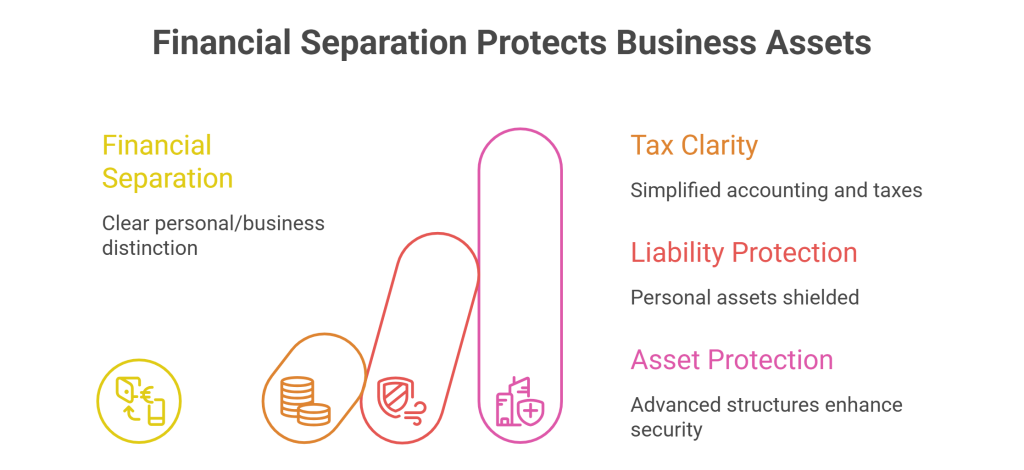
Separate personal and business finances
Blurring the line between personal finances and business money not only causes tax and accounting issues, but it can also weaken your liability protection. Asset separation is crucial for financial protection.
Maintaining clear financial boundaries between you and your company helps reinforce the legal separation required for liability protection.
Actions:
-
Open separate bank accounts and credit cards for your business to maintain clear asset separation.
-
Pay yourself a regular salary or draw, rather than dipping into business funds, as part of sound financial planning.
-
Avoid using personal funds to pay business debts unless absolutely necessary.
-
Keep clear records and documentation of all transactions between you and the business.
-
Use contracts and invoices under the business name, not your personal name.
If you haven’t already, open a dedicated business bank account and start running all income and expenses through it. This simple step strengthens your asset protection plan and supports financial independence.
Accurate bookkeeping and financial reporting also play an important role in maintaining this separation and ensuring your financial records remain compliant and transparent.
Use trusts or holding companies strategically
Advanced asset protection strategies such as trusts or holding companies can offer an extra layer of protection, especially for growing businesses planning for business expansion. Trust asset protection combined with proper estate planning and succession planning creates comprehensive wealth management.
These structures are often used to separate valuable assets from day-to-day business operations, reducing the risk that operational issues could impact those assets.
Actions:
-
Consider holding valuable business assets (e.g. intellectual property, property, or equipment) in a separate entity for better trust asset protection.
-
Explore using a family trust to hold your personal or business shares as part of your estate planning.
-
Use a trading company for operations and a holding company for asset protection to protect your assets.
-
Seek professional advice before setting up complex structures as they must be set up and maintained properly to be effective. Professional asset protection services can guide you through this process.
-
Don’t assume a structure protects you without the right legal documentation in place.
Talk to a lawyer or accountant about whether your business would benefit from a trust or holding company structure based on your size, risk, and goals. This is asset protection 101 for serious business owners.
Proper structuring can also support long-term succession planning and help ensure the continuity of your business across generations.
Protect yourself with contracts and insurance
Your legal structure helps, but it doesn’t replace the need for strong operational protections like contracts and insurance. Comprehensive financial protection requires multiple layers.
Actions:
-
Use written contracts for all clients, suppliers, and team members.
-
Avoid personal guarantees where possible, or negotiate limits to protect personal assets.
-
Make sure your terms and conditions are clear, legally sound, and up to date.
-
Maintain adequate business insurance including liability insurance, professional liability coverage, professional indemnity, cyber protection, etc.
-
Regularly review your policies and coverage with an advisor.
Review your current contracts and insurance policies. If it’s been over 12 months since you last updated them, schedule a legal and insurance review to ensure your financial security.
Combining proper legal agreements with appropriate insurance coverage provides an additional layer of protection beyond your business structure.
Review your structure regularly
Business structures should not remain static. As your company grows, hires employees, takes on larger contracts, or expands into new markets, your risk profile can change significantly.
Regularly reviewing your business structure with financial and legal advisors ensures that your asset protection strategy remains effective and aligned with your business goals.
Final thoughts
Protecting your personal assets doesn’t happen by chance, it’s the result of smart asset protection strategies made early and reviewed regularly. By choosing the right structure, separating your finances, and using legal and insurance tools, you can run your business with greater peace of mind, confidence, and financial security. Don’t wait for something to go wrong before acting, set up strong protections now through comprehensive protection planning, and you’ll thank yourself later.
A proactive approach to asset protection allows business owners to focus on growth while knowing their personal financial security is safeguarded.
Not sure if your current structure is doing its job?
Let’s take a look. Book a chat with our team at Tall Books to review your setup and put stronger protections in place. Our asset protection services can help you develop a customized asset protection plan.